Nablai November 19, 2026 18:00
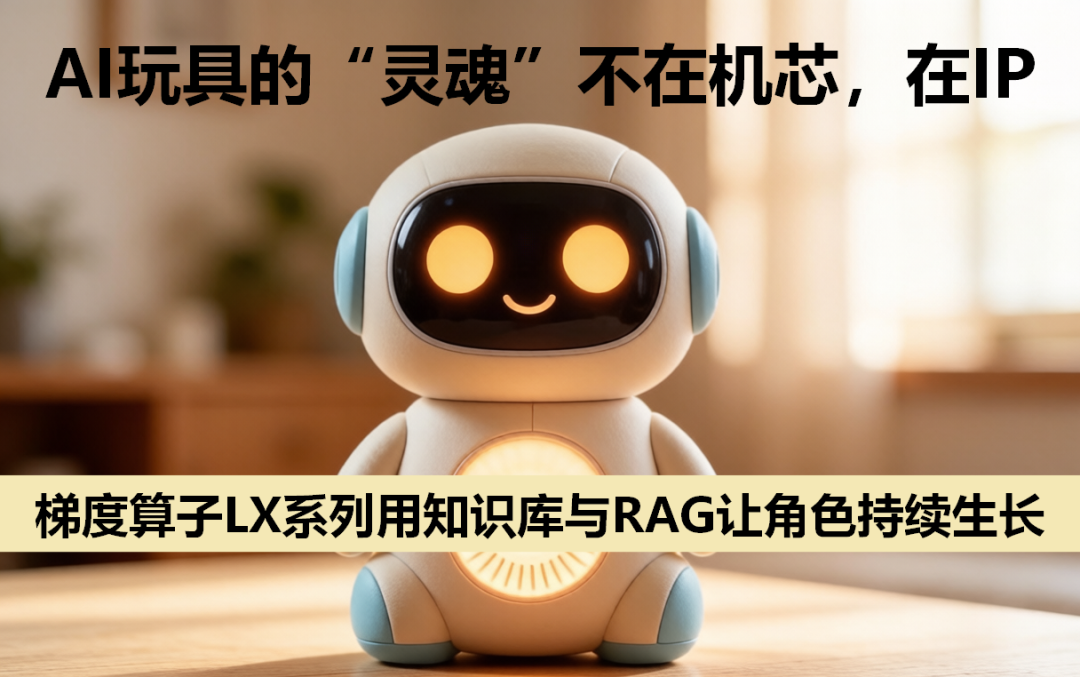
Over the past year, the AI toy market has been red hot. Upstream AI module vendors have order books filled to bursting, solution providers are holding press conference after press conference, and the hardware barrier to entry is disappearing at a visibly accelerating pace.
Yet an awkward fact remains: the busier the supply side gets, the quieter the consumer side becomes. Multiple industry observers have repeated the same observation at trade shows — many products use nearly identical technical solutions, competition concentrates on looks, character design and price, and products that keep users engaged long term are still rare. Some insiders put it more bluntly: the same solution provider serves multiple toy makers at once; the upstream collects orders while the products reaching the market are heavily commoditized, with differences limited to appearance and character design.
That means a question most people avoid is coming to the surface: when AI module solutions are no longer a moat, what makes users stay with an AI toy? The answer from the Nablai LX Series: free the character's "soul" from firmware, put it into a cloud knowledge base, and let RAG keep the IP growing.
1. The AI Module's "Sweet Trouble": The More Mature It Gets, the Harder Differentiation Becomes
Two years ago, building an AI toy demanded serious technical investment — voice wake-up, noise reduction, children's speech recognition, low-latency response, each one a project of its own. Today these capabilities are becoming standard. Sub-2-second response latency, 95%+ children's speech recognition, long-term memory, emotion awareness, gamified growth mechanics — solution providers can deliver the whole package. Touch feedback, electronic expressions, NFC social features, low-power wake-up — all can be tucked into one AI module and configured as needed.
Mature technology supply is of course a good thing. But it also carries a brutal consequence: any capability you can buy, your competitor can buy too. When everyone builds look-alike experiences from the same solution, the user's decision comes down to one thing — do I like this character?
This is not a feature-level competition; it is an IP-level competition. And the technical foundation of IP competition is, precisely, not the AI module itself.
2. Character First, AI Second
A product logic that runs counter to the mainstream is emerging in the industry, and it deserves a close look.
Most makers take this path: pick an AI module, connect an LLM, slip it into a generic plush shell, and ship. What users get is "a talking plush toy." The alternative path is: first craft a character with a persona, a worldview and an aesthetic, then use AI to give it dialogue and memory. What users get is "the AI edition of this character."
The difference between these two sentences determines whether the user-product relationship is shallow or deep. Feature experiences can be replaced by the next cheaper AI module; character attachment cannot.
But "character first" is only the starting point. Whether a character can keep growing in users' hands depends on whether the technical architecture leaves room for the IP to breathe — exactly the problem the Nablai LX Series was designed to solve.
3. The Bottleneck of Traditional Architecture: The IP's "Soul" Is Locked in Firmware
Many brands overlook a technical watershed when choosing a solution.
The traditional approach hard-codes a character's personality, lines and knowledge into firmware. Change one line of tone, and you re-flash, re-prototype, re-test. Content and hardware are welded together; the IP's "soul" is effectively locked inside a chip. The result: the character is frozen at the factory gate, and when the ops team wants to add holiday storylines or a few worldview lines, the engineering cost makes it not worth doing.
A subtler problem: knowledge in firmware is static. The character can only answer questions within a preset scope; anything outside its worldview either gets a wrong answer or breaks character with the tone of a generic LLM. What users feel is "a chatting AI wearing a costume," not "this character is talking to me."
The Nablai LX Series unties this knot at the architectural level.
4. The Nablai LX Series Answer: Soul in the Cloud, AI Module as the Vessel
The core design of the Nablai LX Series puts persona and knowledge in the cloud while the AI module handles on-device interaction.
Specifically, the LX Series lets brands connect their own LLM or a fine-tuned proprietary model; conversation style, knowledge base and personality are all brand-defined. The companion AMS vendor management platform lets brands manage devices, user data and content operations on their own — what the character says, which voice it uses, and the pace of updates are fully in the brand's hands. Built on ESP32-S3, the LX Series supports on-device wake word, local commands and sensitive-word filtering, while complex dialogue and knowledge retrieval run in the cloud.
The immediate change this architecture brings: brands can operate a character the way they operate an account. Add a new line today, swap in a holiday-limited response tomorrow — users receive it via OTA without touching the hardware. The character's growth is no longer hostage to hardware. An IP's lifecycle is three, five or more years; an AI module solution's lifecycle may be only one or two. Keep the soul in the cloud and the AI module is just the vessel — swap in a new hardware generation and the character remains the same character, memories intact, persona unchanged.
The core capability that makes this architecture actually run is the knowledge base and RAG.
5. Knowledge Base and RAG: Grounding IP Characters in Real Sources
An AI character with an LLM but no knowledge base is essentially improvising. It may speak fluently, but what it says may not fit the IP's worldview, may not follow the character's speech habits, and may even contradict the established setting.
The Nablai LX Series solves this with a knowledge base plus RAG (retrieval-augmented generation) mechanism. The brand organizes the character's worldview documents, character sheets, signature lines, forbidden expressions and backstory into structured knowledge sources and connects them to the dialogue pipeline through vector retrieval. When a user asks a question, the system first recalls character-relevant content from the knowledge base, then hands it to the LLM to generate the answer. Every sentence of output is anchored within the framework the IP owner defines.
The industry already has reference practices. The Sophon Agent jointly released by Three-Body Universe and Infinigence AI converts the Three-Body Problem worldview from text material into configuration resources the Agent can call on, trace and reuse at runtime, isolating knowledge management, character expression and interaction memory in three layers so the character keeps its authentic persona while strictly bounding its knowledge. Baidu Intelligent Cloud's AI toy solution likewise lists "IP persona, voice cloning, knowledge base construction and long-term memory" as core IP-operations capabilities.
The Nablai LX Series makes this a foundation layer of the solution: knowledge base structure, retrieval pipeline and persona boundary constraints need no ground-up build — configure them in the AMS backend and they take effect. For IP owners, this means the character's "soul" is no longer a static config hard-coded in firmware, but a dynamic asset that keeps growing and calibrating in the cloud.
6. You Can Buy an AI Module — You Cannot Buy an IP
The maturity of AI module solutions has been proven repeatedly: brands that plugged in saw longer conversations, products selling out at launch, one AI module supporting rapid iteration across multiple IP products. Hardware-side efficiency is rising fast — that much is certain.
But another thing is equally certain: there is no standardized "AI module" you can procure for building an IP. It takes persona refinement, worldview construction, aesthetic judgment and sustained content investment. Some brands lean on mature IP licensing and ride an existing wave; others build their own IP universe from zero, a slower but more controllable road. Both are valid, but they share one common truth: the value of an IP cannot be packaged and delivered by a solution vendor.
One insider's judgment is worth pondering: AI's powerful Q&A ability applies to a very broad range of fields, but toys are deeply personal — merely putting an LLM inside a toy does not match users' real needs. No matter how strong the model, if it cannot hold up to what users actually want, retention will not improve.
Users never pay for "it can talk"; they pay for "I want to talk to it." And wanting to talk to it requires a character whose words are grounded, persona-consistent and continuous — exactly what the knowledge base and RAG guarantee at the technical level.
7. A Decision Framework for Brands
If you are making product decisions for AI toys, there is one question worth answering before any solution selection: are you selling a device, or a character?
If the answer is a device, AI module + generic shell + LLM connection can indeed ship fast. Mature supply chain, controllable cost, short time to market. But prepare yourself mentally: the user relationship starts from feature experience, and feature experience is the easiest thing to be replaced.
If the answer is a character, investment in the knowledge base and RAG architecture must come first. Not "fill in content later after the hardware works" — but deciding, before you even pick an AI module: who is this character, what does it say and refuse to say, and what stories can it still tell three years from now.
This is where the value of the Nablai LX Series lies: not just an AI module, but a technical foundation that lets IP characters keep growing — soul in the cloud, knowledge in the base, RAG keeping every word grounded, and the AI module simply delivering the character steadily into users' hands. You can buy an AI module; you cannot buy an IP. The capability that makes an IP truly "alive" in users' hands deserves to rank above the feature list on your selection checklist.
Keywords: AI toys, IP ecosystem, knowledge base, RAG, Nablai LX Series, AI module solution, character persona, content ecosystem, cloud memory
Shenzhen Nablai Intelligent Technology Co., Ltd. — AI module specialists for smart toys
📧 contact@nablai.com.cn 🌐 www.nablai.com.cn